

Key Takeaways
- Baby loss grief doesn’t fade — even two years later, I’ve learned it changes but never disappears.
- Empathy matters — simple words like “I’m thinking of you today” can ease the loneliness of grief.
- Silence hurts more than imperfect words — acknowledgment, even if clumsy, is better than saying nothing.
- Grieving parents don’t “get over it” — but empathy helps them carry their grief with more support and less isolation.
- Love and empathy ripple forward — what we offer one another in grief can shape deeper connections for the future.
My Story
The death of a baby is one of the deepest and most painful wounds a parent can carry.
When my precious baby girl, Baby Girl, died at 20 weeks, the ache was not only in my heart but also in my body. Unlike other grief I had faced, this was different—it was my daughter, my body, and my dreams for her life. My loss happened midway through pregnancy, and while I carry that weight deeply, I also want to honor that others have experienced the unimaginable pain of losing a living child after birth.
For the past two years, grieving her has shaped me in profound ways and continues to teach me about love, loss, and the power of empathy.
In the beginning, I allowed myself to grieve, but then I became pregnant again shortly after. I was dealing with the sickness of pregnancy, the demands of a newborn who faced medical issues in her first year, and my own ongoing thyroid struggles.
It feels as though my body is only now catching up to the grief I couldn’t process before.
This year, on August 30, I marked two years since Baby Girl died. The grief rose up with a rawness and intensity that felt almost as heavy as the beginning.
It felt physical—as a crushing tightness in my chest, like someone was sitting on me. The tears came hard, and the pain was deep.
I gave myself space this time: I lit Baby Girl’s candle, spoke to her, and bought a plant to remind me of her life and her place in my heart. I also wrote a blog post in her honor — A Mother’s Love Never Dies: Remembering My Baby in Heaven — and joined online support groups for grieving mamas of stillborn babies. These connections and rituals have helped me carry her memory with love while finding comfort in community.
I’ve written before about this journey in Motherhood After Loss: My Stillbirth Story, Faith Journey, and Rainbow Baby. The ache of grief reminds me that healing is not a single moment but an ongoing process.
Why Baby Loss Grief Is Different
It’s hard to believe some of the hurtful things people say to grieving parents. Comments like “you can try again” or “be grateful for the baby you have now” can cut deeply, even when they’re meant to comfort. Even in silence, there’s often an unspoken expectation to “suck it up,” “move on,” or simply be happy because another baby came after.
“No child replaces another. A human life cannot replace a human life.”
Grieving the death of a baby is painful in ways that stay with you every single day. Even now, two years later, I continue to feel its impact on both my identity and my body.
As Psychology Today explains, perinatal loss carries a complex trauma that reshapes a parent’s sense of self, hopes, and dreams in ways other grief often does not.
I also reflected on this tension in Embracing Love on Mother’s Day: Honoring My Daughters, where joy and sorrow sit side by side.
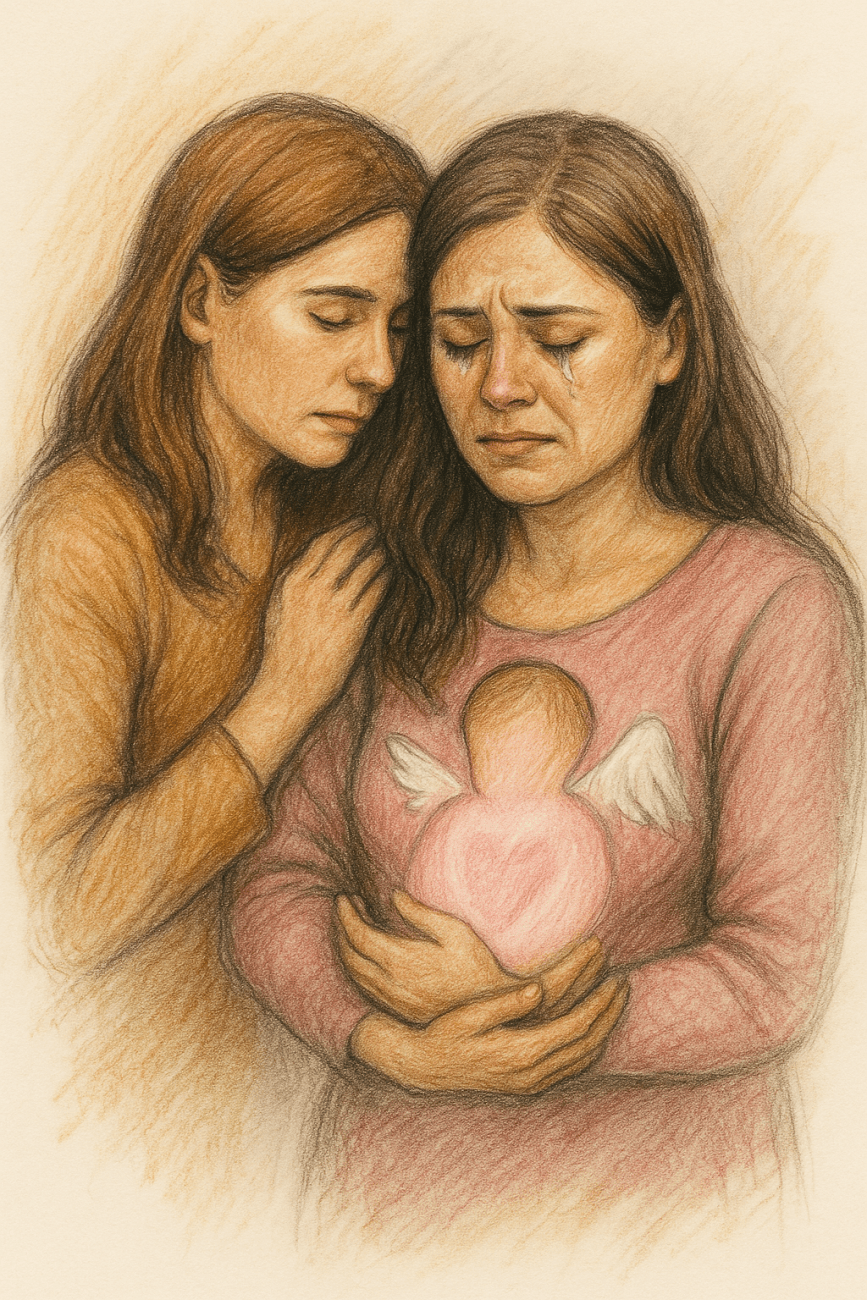
The Silent Expectations Placed on Grieving Mothers
Many grieving parents feel pressure from others to “move on” quickly, especially if they have another child later. But while others may forget dates and milestones, a mother never forgets.
The day your baby died is not something you “get over” — it is a part of you.
This is why empathy and acknowledgment matter so deeply.
Empathy means feeling with someone—allowing yourself to step into their shoes.
In the case of baby loss, it’s feeling the ache of losing a child.
What Empathy Sounds Like
Empathy can sound like:
- “I know this day is so hard for you. I’m here for you.”
- “It must be so painful to have lost your baby.”
- “You’re doing such a loving job remembering her and still showing up for your family.”
These words validate a grieving parent’s experience. They don’t erase the pain, but they ease the loneliness.
I’ve received kind comments from people, and I’m grateful for them. But often what’s missing is empathy—the part that says: “I see your pain. I understand this day is hard. I remember with you.”
Even simple words like “I’m thinking of you today” can go such a long way.
As Psychology Today notes, certain words—though well-meant—can wound deeply, while simple empathetic statements can make all the difference.
The Benefits of Empathy in Grief
Empathy may feel small, but it has powerful effects. When someone offers true empathy to a grieving parent, it can:
- Reduce loneliness – Parents feel less isolated in their grief when someone acknowledges their pain.
- Validate emotions – Empathy affirms that their feelings are real and important, not something to “get over.”
- Strengthen relationships – Simple, caring words build trust and connection between grieving parents and their support people.
- Support healing – While empathy doesn’t erase grief, it makes carrying it more bearable.
- Create a ripple effect – When empathy is shown, it often encourages grieving parents to extend empathy in return.
Why People Hold Back—and Why It Still Matters to Try
I know some people hold back from saying anything because they’re worried they’ll say the wrong thing or somehow make things worse.
But here’s the truth:
“Silence is often more painful than imperfect words.”
Even just saying, “I don’t know what to say, but I’m thinking of you,” is far more comforting than saying nothing at all.
Another barrier is the belief that, “I can’t understand, because I’ve never lost a child.”
But you don’t need to have lived the same experience to show empathy. Empathy isn’t about matching circumstances—it’s about connecting with the shared humanity of suffering.
If you’ve ever felt pain, disappointment, or loss of any kind, you can use that to imagine what someone else might be feeling.
Empathy asks us to be brave enough to connect with our own vulnerabilities so we can enter into another person’s.
How Empathy Helps Grieving Parents Heal
This experience has taught me the vital importance of empathy. Maybe it comes more naturally to me because I’m a mental health therapist, but I also believe it’s something all of us can practice.
Empathy doesn’t mean you have to carry someone else’s grief forever. It can be as simple as pausing to say:
“I don’t have much space right now, but I see you. I know this day must be hard.”
Even that small acknowledgment matters.
For me, this two-year anniversary was especially heavy—I struggled to sleep and found myself on the edge of panic at times.
What helped was giving myself permission to grieve and reflecting on how I want to raise Samantha with the gift of empathy.
Living with the Rhythm of Grief
In these two years, I’ve seen how grief shifts—it doesn’t disappear, but it changes shape. Some days are gentler, while anniversaries bring the ache back with an intensity that feels almost as raw as the beginning.
I’m learning to live with the rhythm of grief—the quieter seasons and the heavier waves—while holding onto the love that remains constant.
Writing has also been one of the ways I’ve processed grief. Putting words to my pain has helped me carry it differently.
Closing Thoughts
My grief has no clear ending, and learning to live with that reality is one of the hardest parts. It continues to change me, but it has also deepened me. Even in the heaviest moments, I remind myself that love is what makes the ache so strong—and love is also what carries me forward.
Empathy cannot take away our pain, but it can ease the loneliness of grief. It reminds us that our feelings are valid, our babies are remembered, and we are seen. My hope is that we can all practice empathy more bravely—with ourselves, with each other, and with the stories that are often too tender to speak.
Frequently Asked Questions About Baby Loss and Empathy
1. Why does baby loss grief feel so different from other kinds of grief?
A: Baby loss grief is different because it involves both the loss of a child and the loss of hopes, dreams, and milestones that were never realized.
2. What should I say to someone who has lost a baby?
A: Simple acknowledgment goes a long way. Try: “I’m so sorry for your loss. I’m thinking of you today. I can’t imagine your pain, but I’m here.” Avoid phrases like “at least you can try again” or “everything happens for a reason.”
3. Do grieving parents ever “get over it”?
A: No. Parents don’t “get over” losing a child. Even after two years, I’ve learned it’s about carrying the grief differently as time goes on.
4. How can friends and family best support grieving parents?
A: Offer empathy, presence, and acknowledgment. Ask, “How can I support you today?” Remember anniversaries.
5. Can empathy really make a difference in grief?
A: Yes. Empathy doesn’t remove the pain, but it helps grieving parents feel less isolated. It validates their experience, honors their child’s memory, and makes the grief more bearable.
6. Is every baby loss grief the same?
A: No. Every parent’s grief is unique. My daughter died at 20 weeks, and I feel the weight of that loss deeply. I also acknowledge that some parents have endured the unimaginable pain of losing a living child after birth. While our stories may be different, all grief is valid and worthy of compassion. None of us should compare pain—we can hold space for one another’s experiences with empathy and respect.
An Invitation
If you are a grieving mother reading this, I want to honor your strength and your story.
Your grief matters. Your baby matters. And you matter.
“Empathy cannot take away our pain, but it can ease the loneliness of grief.”
I would love to hear from you: What do you need from your support people? What words, gestures, or presence help you feel seen and cared for?
By sharing, you not only give voice to your own needs, but you may also help others learn how to show up with empathy and love for grieving parents.
If this post resonates with you, please consider sharing it with someone who might need these words. Together, we can create more understanding and compassion around baby loss.

 Inspired Mama Blog